


Product engineering
SaaS Development
We design and build SaaS products end to end: multi-tenant architecture, authentication, subscription billing, dashboards, and the full product surface. Engineered for isolation, security, and scale from the first commit — so growth never forces a rebuild.
Engineered to production standard · fully owned
The problem
A prototype that wins the demo often can't carry the second customer — no tenant isolation, no billing, no path to scale without a rewrite.

Our approach
We build SaaS that's production-grade from the first commit: multi-tenant, secure, billable, and ready to grow.
A product that scales when you do.
Multi-tenant architecture, billing, and self-serve — built to win the market and hold up under load.
- TargetPlatform uptime
- 99.9%
- TargetOps load removed
- −60%
- TargetFaster iteration
- 3×
- TargetUsers / tenant
- 10k+
Figures are targets we engineer to on a typical engagement — not averaged client results.
Multi-tenant from day one
- Model
- Build
- Bill
- Scale
- Retain
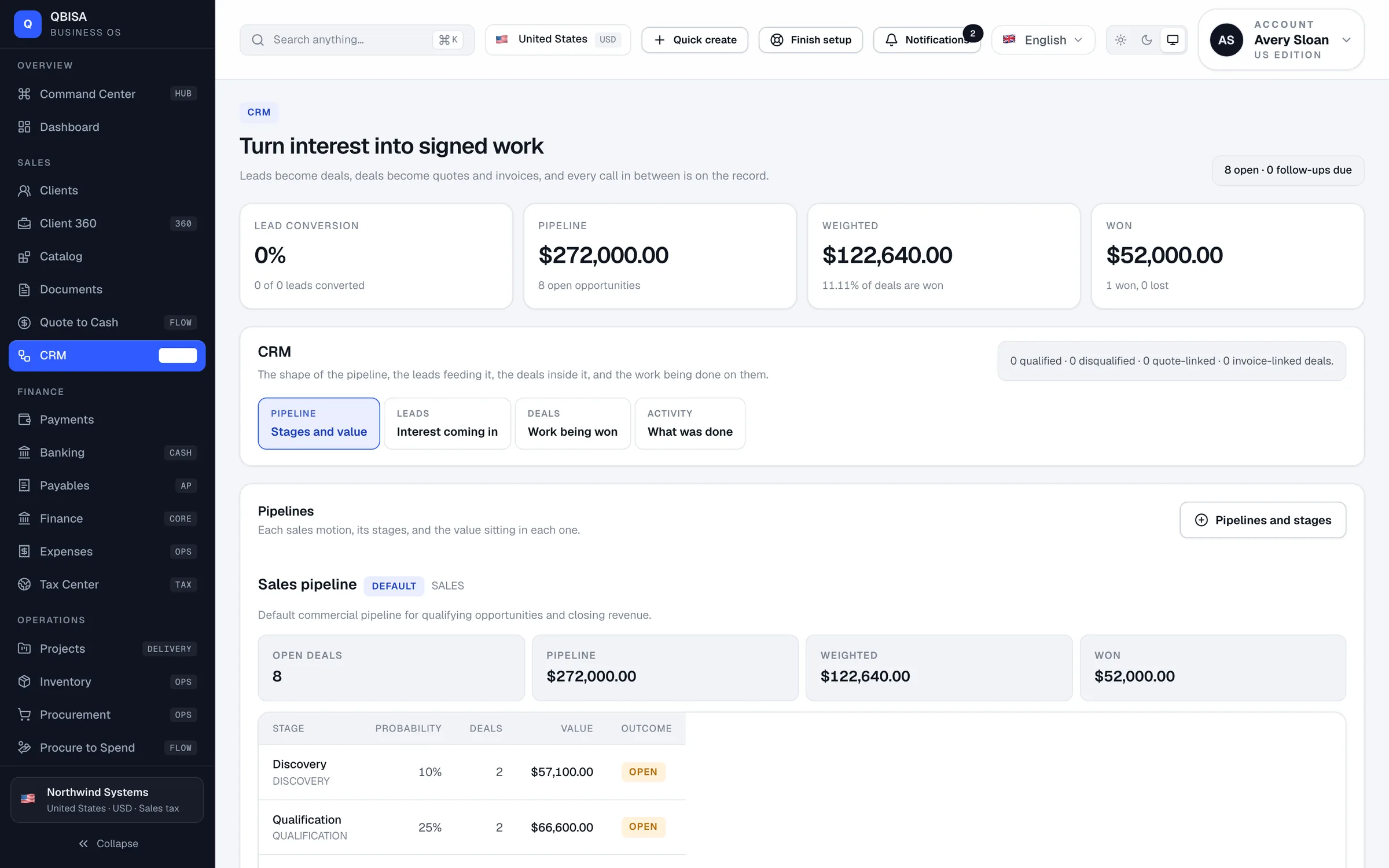
Our own product
QBISA
A next-generation ERP for companies of up to 10,000 employees
Read the case studyWho this is for
Funded startups past the prototype
Turn a demo that won the round into a production platform that can actually onboard and bill your next hundred customers.
Internal tools worth productizing
Take a tool your team already depends on and turn it into a multi-tenant product you can sell.
Vertical SaaS founders
Own a workflow end to end for a specific industry, with the architecture to defend that position as you scale.
Where teams put it to work

B2B SaaS
Multi-tenant platforms with teams, roles, and seat-based billing.
Vertical SaaS
Industry-specific products that own a workflow end to end.
Tool → product
Turn a successful internal tool into a sellable, scalable product.
Why this, why now
Every strong SaaS company is really a platform company.
Multi-tenant architecture and billing either get decided right at the start, or get rebuilt — under load, with customers already depending on you — in year two.
Typical timelines
Ballpark, for a focused first version — not a guarantee, a starting point for scoping.
- MVP core product (auth, dashboard, one plan)6–8 weeks
- Multi-tenant SaaS with billing8–12 weeks
- Vertical SaaS with workflow depth12–16 weeks
- Enterprise-ready (SSO, roles, audit)+4–6 weeks
How we build SaaS Development

Architect
Multi-tenant data model, auth, and isolation decided up front — not retrofitted.
Build
The full product surface: onboarding, dashboards, roles, and admin.
Monetize
Subscription billing, plans, metering, and entitlements wired in.
Scale
Performance, observability, and the operations to grow safely.
What we ship
- Multi-tenant architecture & data isolation
- Authentication, roles & permissions
- Subscription billing & metering
- Admin & customer dashboards
- Onboarding & self-serve flows
- Usage analytics & observability
Typical stack
- Next.js
- TypeScript
- PostgreSQL
- Stripe
- Redis
- Vercel

Questions, answered
Yes — you own the product, the code, and the infrastructure. No lock-in.
We default to multi-tenant with strong isolation, and do single-tenant where compliance demands it.
Yes. We audit, stabilize, and re-architect existing platforms as well as build new ones.

Tell us about your SaaS Development project
Let's turn it into something that earns its place in production.

A specialist reads every message personally — usually within one business day.

Building a SaaS worth scaling?
Book a strategy call. We'll discuss your goals, the architecture, and how we'd build it.